
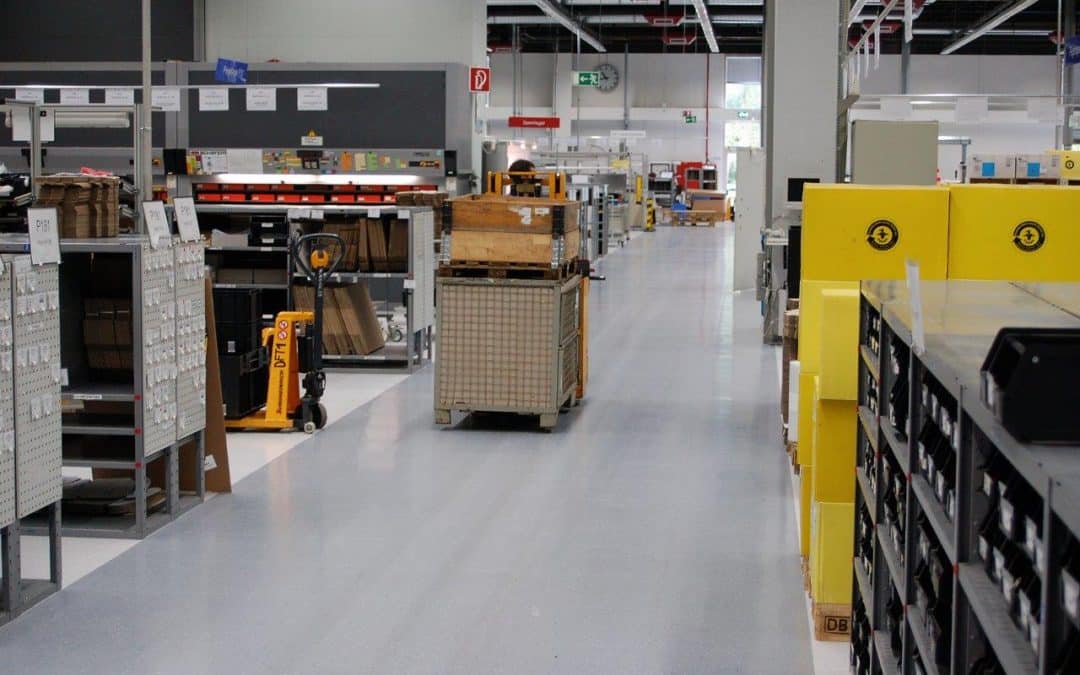
Autumn and winter place far greater demands on commercial and industrial flooring than the warmer months.
Rainwater, mud, grit, leaves and general outdoor debris are carried into buildings on shoes, trolley wheels, forklifts and delivery equipment. Entrances become wetter, warehouse traffic spreads contamination further inside, and hard floors can quickly lose their finish if maintenance routines are not adjusted.
Preparing floors before the wetter weather arrives can reduce slip risks, protect surfaces and make day-to-day cleaning easier throughout the season.
For facilities managers and operations teams, September is a good time to inspect flooring, review entrance areas and put a winter maintenance programme in place before conditions deteriorate.
Start With the Entrance
Most winter floor contamination enters through external doors.
Every person, trolley or vehicle that moves from outside to inside can carry water, mud, grit and fine particles onto the floor.
If this material is not captured near the entrance, it is gradually spread deeper into the building.
A well-planned entrance area should therefore form the first line of defence.
Rather than relying on a single small mat, larger commercial premises can benefit from several stages of matting designed to remove different types of contamination.
Use a Multi-Zone Entrance Matting System
Entrance matting works best when it covers enough distance for footwear and wheels to make repeated contact with the surface.
In larger commercial environments, a matting zone extending approximately 4.5 to 7 metres can significantly improve the amount of dirt and moisture captured before people reach the main floor.
Different sections can perform different jobs.
Heavy-duty scraper matting outside or immediately inside the entrance helps remove larger particles, grit and mud.
A secondary matting area can then remove additional moisture and finer dirt.
More absorbent material further inside can capture the remaining water before it spreads into reception areas, corridors or workspaces.
The exact arrangement will depend on the building layout and traffic levels, but the principle is simple: deal with dirt and water before they travel any further.
Keep Entrance Mats Clean and Flat
Matting only works effectively when it is maintained.
Once mats become saturated with water and dirt, their ability to capture additional moisture is reduced.
They should therefore be vacuumed, cleaned and dried regularly during wet weather.
The floor underneath should also be inspected and cleaned.
Moisture trapped beneath a mat can create staining, unpleasant odours and potential slip problems.
Mats should always sit flat against the floor.
Edges that curl upwards can become a trip hazard, particularly in busy entrances where people are moving quickly.
Inspect Hard Floors Before Winter
Autumn is a good time to examine hard flooring for signs of wear.
Concrete, stone, vinyl and other resilient surfaces may already have suffered gradual deterioration through normal traffic.
Look for areas where protective finishes have worn thin, become dull or started breaking down.
Winter grit can make this damage considerably worse.
Small abrasive particles trapped underneath footwear and wheels effectively act like sandpaper against the floor surface.
Repeated traffic then wears away protective coatings and can eventually expose the flooring underneath.
Restore Protective Finishes Early
Where a hard floor uses a seal, polish or other protective finish, it is better to restore it before winter rather than waiting until the surface has deteriorated further.
A sound protective layer makes routine cleaning easier and provides an additional barrier against dirt and moisture.
This is particularly important in heavily used areas such as:
- Main entrances.
- Corridors.
- Reception areas.
- Warehouse walkways.
- Production areas.
- Canteens.
- Loading areas.
Where wet or highly polished surfaces regularly create concerns, suitable anti-slip floor treatments can also help improve grip on appropriate commercial and industrial flooring.
Once a protective coating has worn through, contamination may begin affecting the underlying flooring directly.
Preventative maintenance can therefore reduce the likelihood of more extensive restoration being required later.
Treat Grit as an Abrasive Contaminant
Winter grit is easy to overlook because the individual particles are small.
The damage occurs through repetition.
Thousands of footsteps, trolley movements and vehicle passes grind grit into the floor surface throughout the working day.
This can dull polished finishes, scratch resilient flooring and accelerate wear on coatings.
Removing dry particles before wet cleaning is therefore important.
Vacuuming, sweeping or dust-mopping first helps lift abrasive material from the surface rather than dragging it around during mopping.
Deep Clean Carpets Before the Wettest Weather
Commercial carpets should ideally be deep cleaned before prolonged wet weather arrives.
Dry soil and grit can settle deep within carpet fibres throughout the year.
Once winter begins, additional moisture and heavy foot traffic can drive these particles further into the pile.
Abrasive dirt can gradually cut and dull carpet fibres, particularly around entrances and main circulation routes.
Regularly maintaining carpets in high-traffic commercial environments helps control the dirt, grit and moisture that would otherwise become embedded in the busiest areas.
Removing built-up dry soil before the wet season starts gives the carpet a cleaner baseline and makes regular maintenance more effective.
It also means winter cleaning can concentrate on managing fresh contamination rather than dealing with months of accumulated dirt.
Increase Cleaning Frequency During Wet Weather
A cleaning routine that works in summer may not be sufficient during autumn and winter.
Wet weather can significantly increase the amount of contamination entering a building.
High-traffic areas may therefore need more frequent attention.
This can include:
- Additional vacuuming.
- More frequent dust-mopping.
- Spot cleaning throughout the day.
- Increased mechanical floor scrubbing.
- Regular entrance checks.
- More frequent mat cleaning.
The aim is to remove contamination before it is spread across a larger area.
Focus on Main Circulation Routes
Dirt rarely spreads evenly throughout a building.
It follows traffic.
Main entrances, corridors, loading areas and routes between departments usually receive the greatest amount of contamination.
In warehouses, forklift and pallet truck routes can carry grit and moisture significant distances from loading bays.
Cleaning programmes should therefore prioritise these high-use routes rather than treating every part of the building identically.
Lower-traffic spaces may require less frequent attention, allowing resources to be concentrated where they are most useful.
Control Mud Before It Spreads
Mud can become a major problem during periods of persistent rain.
Once it dries, it leaves fine soil particles that can be tracked through the building.
While wet, it can create a slip hazard and leave floors visibly dirty.
Entrances serving yards, construction areas, industrial estates and loading zones may be particularly vulnerable.
External scraping systems, effective matting and regular spot cleaning can help prevent mud from travelling further into the building.
Where vehicle traffic enters covered industrial areas, wheel contamination may also need to be considered.
Pay Special Attention to Loading Bays
Loading areas are exposed directly to outdoor conditions.
Rainwater can blow into open bays, while forklifts and pallet trucks carry moisture and grit from external yards.
As a result, these areas may deteriorate much more quickly during autumn and winter.
Cleaning schedules should take account of:
- Delivery volumes.
- Vehicle movements.
- Open-door periods.
- Weather conditions.
- Type of goods handled.
- Surface type.
More frequent mechanical cleaning may be required during prolonged wet periods.
Manage Warehouse Traffic Carefully
Industrial floors can experience constant movement.
Forklifts, pallet trucks, machinery and pedestrian traffic all contribute to the movement of dirt through a facility.
Once grit enters a warehouse, vehicle tyres can carry it along main routes and into adjacent areas.
This is why entrance control and routine floor cleaning need to work together.
Removing contamination at the perimeter reduces the amount that needs to be dealt with elsewhere.
Do Not Wet Mop Over Loose Grit
Wet mopping should not be the first step when a floor contains loose grit or debris.
Adding water can turn dry contamination into an abrasive slurry.
The mop then pushes this material across the surface.
A better approach is to remove loose particles first using vacuuming, sweeping or dust-mopping.
Wet cleaning can then deal with remaining dirt and marks more effectively.
This simple sequencing change can reduce unnecessary abrasion.
Watch for Winter Salt Residue
Where salt or ice-melting products are used outside, residue can be carried indoors.
Once moisture evaporates, white or cloudy deposits may remain on flooring.
Repeated build-up can make floors look dull and difficult to clean.
In some environments, a suitable floor-neutralising product may be required to break down alkaline salt residue.
The cleaning product should always be appropriate for the flooring type and used according to the relevant safety instructions.
Overuse of unsuitable chemicals can cause as many problems as the residue itself.
Use the Right Equipment
Winter floor maintenance becomes much easier when cleaning teams have equipment suited to higher moisture levels.
Useful equipment can include:
- Wet-and-dry vacuums.
- Auto-scrubbers.
- Commercial vacuum cleaners.
- Dust mops.
- Dual-bucket mop systems.
- Floor drying equipment.
- Wet floor signs.
Larger sites may also benefit from ride-on cleaning machinery for extensive open areas.
Equipment should match the size of the premises, the type of flooring and the volume of traffic.
Deal With Water Quickly
Standing water should never be left in busy commercial areas.
Entrances are especially vulnerable during heavy rain because fresh moisture can be brought in continuously.
Regular checks can identify wet patches before they become a larger hazard.
Wet-and-dry vacuums and absorbent matting can be particularly useful where significant amounts of water are entering the building.
Temporary warning signs should be used whenever a floor remains wet after cleaning or because of weather conditions.
Protect High-Value Flooring
Some commercial environments contain flooring that is expensive to repair or replace.
Stone, polished concrete, luxury vinyl and specialist resin systems can all suffer if grit is allowed to remain on the surface for prolonged periods.
The cost of a structured maintenance programme is often small compared with the cost of restoring a badly worn floor.
For sites that need consistent cleaning throughout the colder months, commercial maintenance contracts can provide a more structured approach to ongoing floor care and seasonal maintenance.
Preventative maintenance should therefore be viewed as asset protection rather than simply routine cleaning.
Check the Condition of Floor Coatings
Industrial floor coatings should be inspected before winter.
Look for:
- Worn traffic lanes.
- Flaking coatings.
- Cracks.
- Surface scratches.
- Areas where the substrate is exposed.
- Damage around machinery.
- Deterioration near loading doors.
Minor deterioration can worsen quickly when moisture and abrasive dirt are introduced.
Early repairs may prevent a larger section of coating from failing.
Keep Pedestrian Areas Separate From Wet Zones
Where possible, pedestrian routes should be protected from areas experiencing high levels of moisture.
Clear floor markings, temporary barriers and signage can help direct staff away from cleaning zones or particularly wet entrances.
This is especially important in warehouses and industrial buildings where pedestrians and vehicles share nearby spaces.
A clear route is easier to maintain and reduces the risk of contamination being spread throughout the site.
Review Slip Risks
Autumn and winter increase slip risks because floors remain wet for longer.
Facilities managers should identify areas where moisture is most likely to accumulate.
Typical problem areas include:
- Entrances.
- Loading bays.
- Staff doorways.
- Canteen entrances.
- Corridors close to external doors.
- Warehouse pedestrian routes.
Cleaning frequency, matting and warning signs can then be concentrated on these locations.
Build Cleaning Around Weather Conditions
Winter cleaning schedules should not remain completely fixed.
Weather changes quickly.
A prolonged dry spell may require less intensive entrance maintenance, while a week of heavy rain may justify additional cleaning throughout the day.
Flexible cleaning allows resources to respond to actual conditions.
Facilities teams should be prepared to increase cleaning frequency when poor weather is forecast.
Put a Planned Maintenance Programme in Place
Reactive cleaning is usually less efficient than planned maintenance.
A structured autumn and winter programme can define:
- Daily cleaning tasks.
- Weekly deep-cleaning priorities.
- Entrance mat inspections.
- Floor coating checks.
- Carpet maintenance.
- Machinery requirements.
- High-risk areas.
- Responsibilities for each task.
This creates consistency and makes it easier to identify when standards begin to slip.
Commercial premises with mixed flooring can also benefit from scheduling periodic deeper cleans rather than waiting for visible deterioration. Even during colder months, winter carpet cleaning can form part of a planned maintenance programme rather than being postponed until spring.
Include Out-of-Hours Deep Cleaning
Some tasks are easier to complete when the building is quiet.
Out-of-hours cleaning can allow teams to deep clean entrances, scrub warehouse floors or restore finishes without working around constant traffic.
It also gives floors more time to dry before employees return.
For busy commercial or industrial premises, this can be one of the most effective ways to carry out intensive maintenance without affecting operations.
Prepare Before the Weather Turns
Waiting until floors are already wet, dirty and damaged makes winter maintenance harder.
September provides an opportunity to prepare.
Entrance systems can be checked, carpets can be deep cleaned, worn finishes restored and cleaning frequencies reviewed before the heaviest rainfall arrives.
Equipment can also be inspected and supplies ordered before demand increases.
Businesses in the area can also plan commercial and industrial floor cleaning in Lancaster before seasonal dirt, moisture and heavy footfall begin placing greater demands on flooring.
Protect Floors Throughout Autumn and Winter
Successful winter floor care is mainly about prevention.
Stop as much dirt and moisture as possible at the entrance, remove abrasive grit before it damages finishes and increase cleaning in the areas carrying the most traffic.
Hard floors should be inspected and protected before conditions deteriorate, while carpets benefit from deep cleaning before wet contamination increases.
For commercial and industrial premises, a planned maintenance programme can help reduce slip risks, maintain appearance and extend the useful life of flooring throughout the colder months.
Preparing early makes it far easier to keep floors safe, clean and presentable once autumn rain and winter weather become part of the daily routine.